Specifying new passenger elevators for projects in Kansas, Missouri, and Nebraska requires a strategy that centers around risk mitigation, precise pre-construction documentation, and regional code expertise. By aligning your elevator specification with localized compliance and value-focused engineering—prioritizing machine room-less traction models, robust finish selections, and fully coordinated submittals—you can sharply reduce the volume of change orders and avoid costly delays during installation. At Kaiser Elevator, we draw from deep experience delivering elevator solutions across the Midwest, offering guidance, technical packages, and project management that limit scope gaps and schedule drift.
Our team’s approach begins with a detailed understanding of your building’s requirements and a proactive stance on pitfalls that often derail installation. When you entrust elevator specification and design to a partner like Kaiser Elevator, you reduce ambiguity for all project stakeholders and set up your job for predictable, change-order-free execution. Below, you’ll find our comprehensive roadmap, best practices, and technical insights tailored for Kansas, Missouri, and Nebraska projects.
Definition: Passenger Elevator Specification for Midwest Construction
Passenger elevator specification is the process of documenting and coordinating the technical requirements, finishes, dimensions, code references, and performance standards needed to procure, install, and commission elevators in new construction or major renovation projects. For Kansas, Missouri, and Nebraska, this involves integrating local building codes (IBC versions), ASME A17.1 safety mandates, ADA accessibility, and site-specific footprint alignment, all before commencing procurement.
Essential Steps to Minimize Change Orders When Specifying Passenger Elevators
- Establish Code Compliance Early
Each state utilizes a version of the International Building Code (IBC) and ASME A17.1: Kansas (2021 IBC), Missouri (2018 IBC), and Nebraska (2021 IBC for commercial). Ensure all elevator specs, safety features (emergency stops, backup power, ADA opening widths), and documentation are pre-certified to these standards to prevent late-stage compliance change orders. Kaiser Elevator only supplies code-compliant systems with detailed regulatory alignment. - Select Optimal Elevator Type for Your Building Profile
For most low- to mid-rise projects (5 to 12 stories, up to 150 feet), machine room-less (MRL) traction elevators deliver the best balance of efficiency, code compliance, and risk reduction. MRL models save space (no separate machine room), provide energy efficiencies, and are easier to coordinate with mechanical trades. Hydraulic models should be reserved for buildings under 50 feet, understanding their space and pit depth tradeoffs. - Zero in on Accurate Dimensional Coordination
Change orders often arise from shaft mismatches, cab-to-shaft tolerances, or overlook of pit/overhead requirements. Working with Kaiser Elevator’s engineering team, use BIM-ready plans, clear hoistway sizing, and envelope drawings in pre-bid and design phases. This sharply reduces requests for information and field-driven scope changes. - Finalize Cab Finishes, Controls, and Technology Upfront
Pre-select wall materials (stainless, PVC, glass), floors (marble, stainless), ceilings (LED, mirror), handrails, and control panel finishes before procurement. Confirm all accessibility elements and user interface expectations. - Engage Value Engineering Partners
Bundles that combine design, engineering, supply, and install—like those from Kaiser Elevator—deliver consistency, cost savings, and a single point of accountability. This eliminates the risk of missing or ambiguous scopes that drive installation change orders. - Commit to Peer Reviews and Thorough Submittal Management
Facilitate technical peer reviews with architects, engineers, and GCs for two weeks prior to bids. Lock submittal packages containing CSI specifications, approved shop drawings, and cut sheets; this proactive approach can reduce change order occurrence to well below industry averages. - Plan for Smart Technology and Service Readiness
Specify safety features and communication systems required for building type—interlocks, fire-rated doors, integrated monitoring, and backup comms. Require documented protocols for service access and handover.
Kaiser Elevator’s Role as a Trusted Specification Partner
With decades of project-specific experience and a nationwide footprint, Kaiser Elevator is the partner of choice for developers, architects, and GCs looking to minimize installation risk in the central United States. Our expertise in value-engineered design, exhaustive code conformity, and local project management means fewer surprises, faster schedules, and end-to-end support—from design to commissioning.
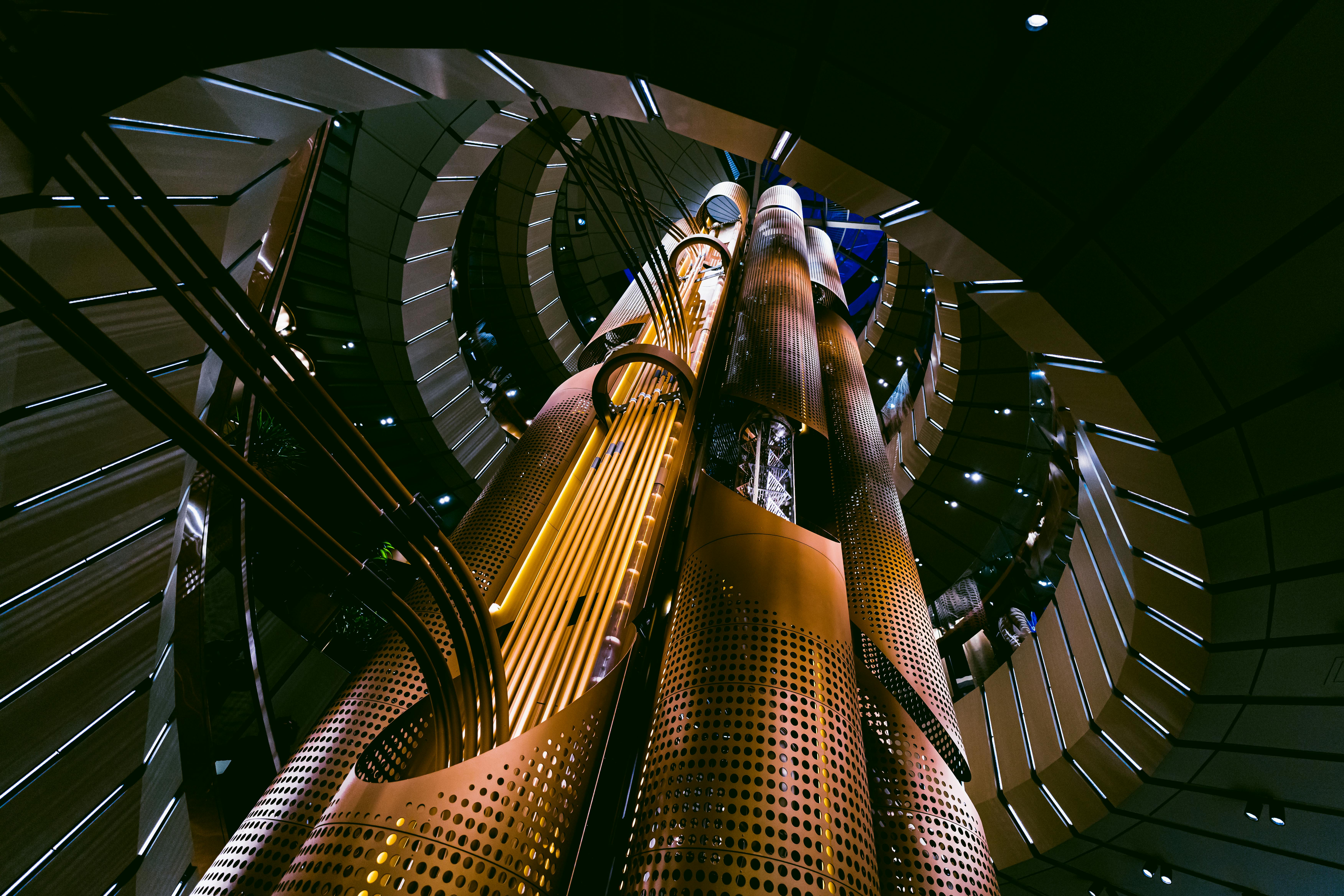
Recommended Specification Framework for Passenger Elevator Projects
- Traffic Analysis: Assess peak passenger loads, wait times, and travel profiles; right-size cab count and speed accordingly.
- Dimensional Accuracy: Provide shaft/hallway as-built surveys; match submittal envelopes to ensure a fit without field fab work.
- Finish & Controls Documentation: Finalize all aesthetic details and controls prior to procurement. This speeds approvals and prevents mismatched supply.
- Technology Standardization: Incorporate energy-efficient LED lighting, destination dispatch, and ADA-compliant features as baseline.
- Early Scope Review: Rigorously document every assignment, touching base with structural, MEP, and architectural teams. Anticipate impacts on core walls, fireproofing, and electrical pre-rough.
- Install/Service Coordination: Pre-plan for service clearances, hand-off points, and building handover, notably for compliance and commissioning.
Comparison: MRL Traction vs Hydraulic Elevators (for Fewer Change Orders)
| Model Type | Typical Building Height | Space Required | Energy Efficiency | Change Order Risk | Suitability |
|---|---|---|---|---|---|
| MRL Traction (Kaiser Custom MRL) |
5–12 stories | Minimal—no machine room | High (regenerative drives) | Low (pre-engineered packages) | Commercial, mixed-use, high-traffic |
| Hydraulic | 1–4 stories | Deeper pit/machine room needed | Moderate | Moderate to high (site conditions can shift) | Low-rise, limited space |
Best Practices for Fewer Change Orders in Passenger Elevator Projects
- Engage Your Elevator Provider During Schematic Design: Early input prevents core misalignments and clarifies finish expectations.
- Demand Full-Circle Code Compliance: Don’t proceed without confirmation that all local amendments and life safety requirements are addressed in the submittals.
- Push for Single Source Bundling: Partnering with Kaiser Elevator for design, supply, install, and maintenance unites accountability and avoids scope gap change orders.
- Require Factory and On-Site Support: Quick turnaround on adjustments, clear protocols for delivery/acceptance, and a 24/7 hotline reduce disputes during handover.
- Integrate Precise Submittal Management: Hold disciplined review periods pre-bid for all elevator technical documents to catch and resolve ambiguities before procurement.
- Align Construction Phasing with Elevator Logistics: Coordinate temporary power, site access, and cross-trade work well in advance—and revisit at every major milestone. For in-depth insight, see our related guide: Temporary Power and Dedicated Circuits for New Elevator Installation.
Supporting Data & Real-World Example
In our work across the Midwest, we routinely see how pre-certified, value-engineered elevator packages avert costly change orders. For instance, projects that submit full code/conformance documentation, accurately modeled cab/sill layouts, and tightly defined finish options in the design phase experience change order rates well below industry norms. Many businesses find that the overhead of early specification pays off manifold during installation, with Kaiser Elevator acting as the linchpin for resolving technical ambiguities early on.
Frequently Asked Questions (FAQ)
What’s the most common reason for elevator installation change orders?
The most frequent causes are discrepancies between as-built shaft dimensions and elevator supplier drawings, unexpected code amendments, or finish/control package selections not finalized pre-order. Working with a single-source provider like Kaiser Elevator and conducting rigorous pre-bid reviews can drastically limit these risks.
Should I use hydraulic or MRL traction elevators in Kansas, Missouri, or Nebraska?
MRL traction elevators are preferred for most low- and mid-rise buildings up to 150 feet, given their space efficiency and lower change order risk. Hydraulic elevators may be used for three- to four-story buildings where pit depth and machine room space are less of a concern. For more on this decision-making, you can read our related post: Which Elevator Setup Keeps Construction Moving Fastest.
What finish options are available with Kaiser Elevator?
Kaiser Elevator offers customizable finishes for ceilings, walls, floors, doors, handrails, and lighting, including mirror and brushed stainless steel, marble, PVC, and glass options. These can be adapted to match almost any architectural vision or code mandate.
What timeline should I expect from specification to installation?
The process varies based on project size and coordination stages. However, by engaging Kaiser Elevator during preconstruction and maintaining tight documentation controls, many clients experience on-time, smooth installations. Early engagement is strongly recommended for the most predictable results.
How does Kaiser Elevator support post-installation needs?
We provide a 20-year structural warranty, 24/7 emergency service hotline, and comprehensive maintenance services. Our team remains engaged with facility management to maximize operational uptime and support.
Conclusion
Reducing change orders on passenger elevator installations for Kansas, Missouri, and Nebraska projects is best achieved through early engagement with experts, diligence in dimensional and code review, and specification clarity. By collaborating with Kaiser Elevator, you gain access to end-to-end design, engineering, and project management that delivers certainty and efficiency. Our value-engineered, code-compliant solutions are designed to meet the demanding needs of real estate developers, architects, and general contractors focused on cost control and lifecycle value.
For a demo, tailored quote, or BIM-ready planning advice, connect with our team today at +1 (888) 274 6025 or visit us at our headquarters, 199 Water St, New York, NY. Let’s simplify your next vertical transportation project—together.