Effective service elevator floor planning is an essential, and often overlooked, foundation for seamless hospitality operations in Florida and South Carolina. Done right, it not only protects guest privacy and brand standards, but also empowers housekeeping, banqueting, maintenance, and vendor logistics to run without daily operational friction. This upfront design discipline can dramatically cut guest complaints, protect revenue throughout peak seasons, and reduce long-term costs—making it one of the most impactful investments for hospitality owners and developers in the Southeast.
Definition: What Is a Hospitality Service Elevator Floor Plan?
A service elevator floor plan is the strategic layout defining the placement, sizing, and circulation of dedicated elevators used by staff for back-of-house functions. In hotels and resorts, this plan covers everything from the route between the loading dock and service elevator, to how carts and staff access linen closets on every guest floor—always prioritizing separation from guest pathways. More than just a technical drawing, the floor plan deeply affects staff efficiency, guest experience, and life safety compliance.
Why Service Elevator Planning Matters for Hospitality Projects
In Florida and South Carolina, climate, building codes, and guest expectations introduce unique challenges for service elevator planning. If any section of the staff path is narrow, exposed, or requires crossing guest areas, years of operational headaches can follow. That’s why at Kaiser Elevator, we advocate a holistic, back-of-house-first approach to elevator layout, ensuring every plan is both robust and adaptable to regional realities.
- Housekeeping and F&B logistics hinge on seamless access to elevators sized for carts, banquet racks, and large equipment.
- Guest privacy and satisfaction are protected by strictly separating service traffic from guest corridors and lobbies.
- Life safety considerations require direct, code-compliant paths for first responders and emergency egress.
Step-by-Step Framework for Service Elevator Floor Planning
1. Map the Complete Service Path
Before any walls are drawn, define the entire route: from truck loading dock, through receiving, along back-of-house corridors, into the elevator vestibule, and then to each floor’s service areas. For Florida and South Carolina projects:
- Ensure covered loading docks (minimum 10–12 feet deep) to protect during intense storms
- Position elevator entrances and pits above anticipated flood levels
- Validate clear, protected passage without crossing guest spaces wherever possible

2. Size Corridors and Doors for Real Use
- Back-of-house corridors: at least 6 feet wide, ideally 7 feet for two-way cart traffic
- Service elevator doors: minimum 3 feet 6 inches clear opening, 4 feet preferred
- Vestibules: at least 6 x 6 feet for cart staging and turning
Test the entire path virtually and, if possible, on site to identify pinch points or awkward turns before construction.
3. Select Right Elevator Type and Capacity
- For low-rise hotels (up to 5–6 stories), hydraulic elevators are common, but require careful management of oil temperature in humid Southeast conditions. Kaiser Elevator advises on technology best-suited for each property based on building type, climate, and usage cycles.
- For mid- and high-rise hotels, traction elevators offer faster travel and better energy efficiency, especially critical given sweltering Florida heat and high power costs.
- Capacities typically range from 3,500 to 5,000 lbs with cabs 5 ft 6 in to 6 ft wide and 7–8 ft deep, sized for banquet and housekeeping operations.
Kaiser Elevator’s diverse portfolio supports fully customizable options, aligning cab capacity, finish, and control technology with both operational intensity and brand requirements.
4. Design for ADA and Code Compliance from the Outset
- Follow ASME A17.1/CSA B44 as required in both Florida and South Carolina building codes
- Doors must clear at least 36 inches, but wider clearances improve accessibility and service flow
- Ensure controls are accessible and tactile, with auditory signals where possible—features included in our standard Kaiser Elevator commercial elevator packages
Integrating code and ADA clearances early reduces risk of expensive redesign or construction delays during plan checking.
5. Separate Guest and Service Traffic Effectively
- Locate service elevators in back-of-house zones, invisible from public lobbies
- On each guest floor, connect elevators directly to service spaces, not public corridors
- In luxury projects, this is a marker of sophisticated, guest-focused design
For more on solutions that avoid shaft, pit, or overhead redesigns, see our guide: Elevator partners and design conflict avoidance in the Southeast.
6. Determine the Right Number of Service Elevators
- For up to 150 keys and 8 floors: usually one well-placed service elevator suffices
- For larger or taller assets: consider multiple cars or dedicated service banks for F&B, banquets, or housekeeping peaks
- Kaiser Elevator can support traffic modeling and simulation to refine recommendations on shaft count and configuration
7. Prioritize Durability in Finishes and Components
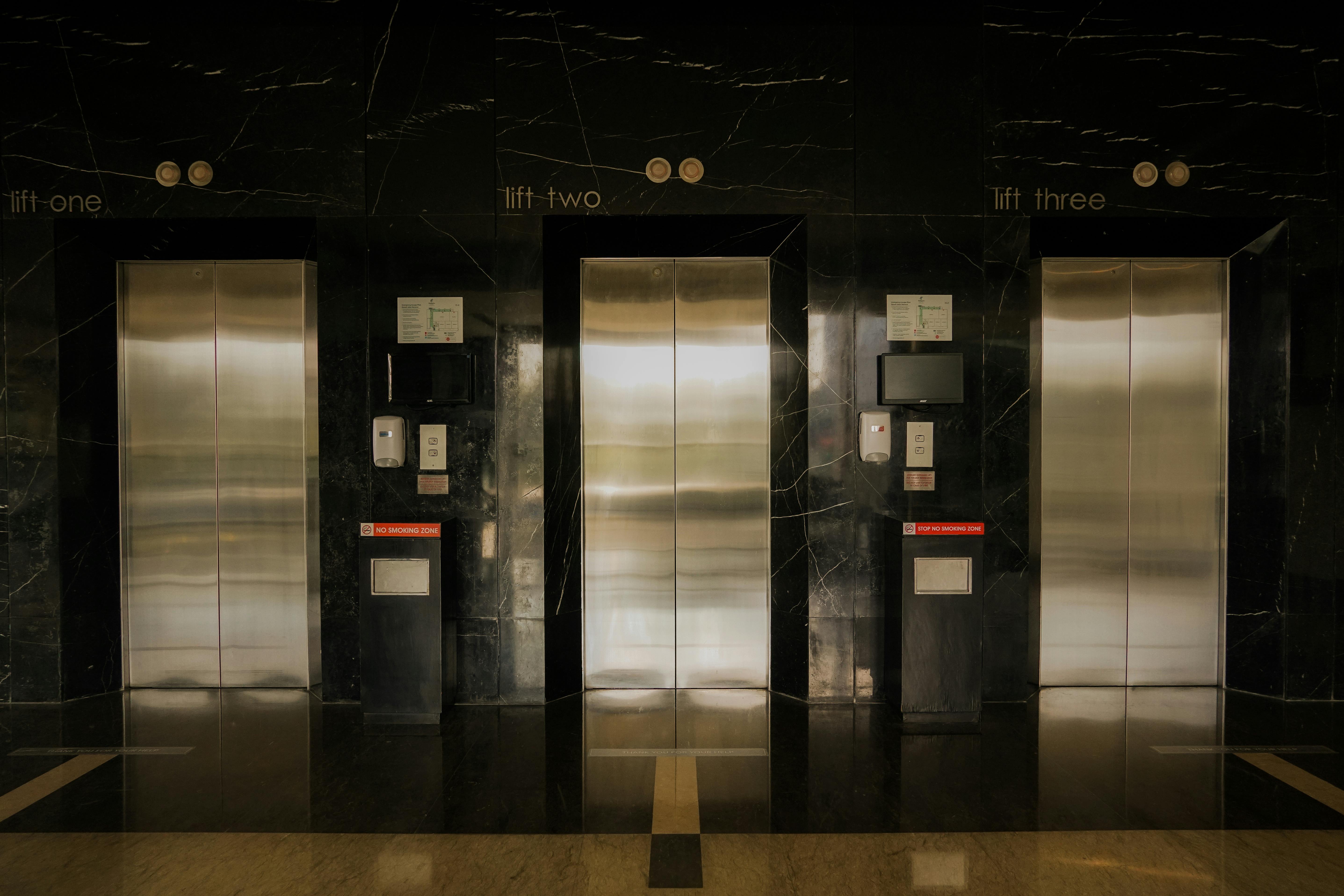
- Use hairline or brushed stainless steel, or heavy-duty PVC for walls to resist cart impacts
- Specify slip-resistant, durable flooring for easy cleaning after spills
- Install robust handrails and corner guards to extend cab life and reduce maintenance
In coastal Florida and Carolinas, focus on corrosion-resistant hardware and nonporous finishes to mitigate salt and humidity effects. Learn more about materials and finishes in our product overview: Passenger elevator material choices.
8. Plan for Maintenance and Modernization Access
- Machine rooms should be accessible and protected from flooding
- Allow clear workspace in front of panels for technical teams
- Provide routes for future modernization, such as controls or cab upgrades, with minimal demolition
Kaiser Elevator’s service plans include thorough inspections and rapid support, but well-planned floor layouts help keep your elevators running with minimal disruption. For more detail, see our comprehensive service process resource.
Best Practices for Floor Plan Review
- Audit every service route from dock to guest floor, confirming no unwanted guest area crossings
- Physically and virtually validate corridor and door clearances with real operational loads
- Coordinate with hotel operators early to plan for staging, traffic management, and scheduling (such as banquet or high-turnover days)
- Engage your elevator partner for simulated traffic modeling, especially in mixed-use or convention hotels
- Integrate local code and ADA updates proactively—requirements evolve and regional inspectors in Florida and South Carolina can be particularly detail-oriented about compliance
Kaiser Elevator’s Support for Southeast Hospitality Projects
- We offer end-to-end elevator solutions—design, engineering, supply, installation, modernization, and service—across Florida and South Carolina hospitality assets
- Our solutions are fully customizable and code-compliant, adapting to any shaft size or building constraints
- Clients benefit from 20-year structural warranties and 24-hour factory-backed service, ensuring long-term reliability for mission-critical hotel vertical transportation
- Our engineering team works directly with architects and owners to ensure floor plans enhance both staff workflow and guest experience
Many developers and hotel operators in the Southeast partner with us to streamline projects, minimize costly redesign, and ensure smoother operations from opening through the multi-decade life cycle of their hospitality asset.
Practical Review Checklist: Service Elevator Floor Plan for Florida & South Carolina Hospitality
- Continuous, covered service path from loading dock to guest floors?
- Corridor, door, and vestibule sizing validated with actual carts and equipment?
- Logical, direct access to back-of-house and housekeeping spaces on every level?
- Full separation of guest and service traffic in lobbies and public spaces?
- Elevator type, speed, and capacity aligned to keys, floors, and hotel programs?
- All ADA, fire, and code requirements embedded from the beginning?
- Staging and scheduling spaces for peak service events?
- Maintenance routes and modernization access understood for the long-term?
FAQ: Service Elevator Floor Plan in Hospitality Projects
What is the ideal capacity for a hospitality service elevator in a Southeast hotel?
For a typical full-service hotel in Florida or South Carolina, primary service elevator capacities generally range from 3,500 to 5,000 lbs. Cab interior sizes of 5 ft 6 in to 6 ft wide, and 7–8 ft deep, are recommended to accommodate large housekeeping carts, banquet racks, and equipment, but the final selection should always fit traffic modeling and brand standards as advised by your elevator consultant, such as Kaiser Elevator.
Should I choose traction or hydraulic elevators for my hotel project?
Traction elevators are preferred for mid- and high-rise hotels due to their faster travel times, energy efficiency, and better performance in Florida’s heat and humidity. Hydraulic elevators are suitable for low-rise properties but require attention to oil temperature and environmental controls in Southeast climates. We assist with selecting the best type for your building and operational requirements.
How early should service elevator planning occur in floor plan design?
Service elevator paths and separation between back-of-house and guest flows should be established in the earliest schematic or design development phases—before walls are finalized. Waiting until later can lead to expensive redesigns or core area loss. Involving Kaiser Elevator from the start can prevent common design oversights.
What codes govern service elevators in Florida and South Carolina?
Both states adopt the ASME A17.1/CSA B44 Safety Code for Elevators and Escalators, along with their specific state and local amendments. ADA, fire recall, and compliance with local AHJs are mandatory. Our team stays updated to ensure your project’s elevator floor plans meet every requirement.
What are the most common mistakes in elevator floor planning for hotels?
Common issues include undersized corridors, lack of cart staging space, elevator doors opening directly to guest areas, and insufficient separation of service from public flow. Skipping coordination with hotel operators and not sizing for actual equipment are also frequent pitfalls. Our structured approach helps avoid these missteps.
Can existing hotels in Florida and South Carolina modernize their service elevator layout?
Yes, many hotels undergoing brand conversion or repositioning benefit from not just equipment upgrades but also layout refinements. Even if moving shafts is not feasible, enhancements in control logic, cab interiors, door operators, and placement of staging zones can make a significant difference in daily operations and guest satisfaction. Kaiser Elevator specializes in both modernization and retrofit adaptations.
How can I ensure my floor plan allows for future service elevator modernization?
Plan for clear technical routes around shafts and ensure access to machine rooms and control systems. Allow space for new equipment, wiring, or upgrades to controls, door operators, and interiors. Our team advises on future-proofing every installation as part of the design process.
Where can I learn more about best practices for elevator planning in the Southeast?
For further guidance, see our related resource: Elevator plan review checklist for architects. Our blog covers specific needs for Florida and the broader Southeast in depth.
Conclusion
Service elevator floor plans are critical infrastructure for hospitality projects in Florida and South Carolina, shaping both guest satisfaction and operational efficiency for decades. By mapping out clear service pathways, prioritizing code compliance, and selecting the right elevator type and finishes from the beginning, hotel owners and developers can control costs, reduce schedule risk, and deliver consistently excellent guest experiences. At Kaiser Elevator, we bring end-to-end expertise to every phase—design, supply, installation, modernization, and service—helping our clients keep their projects on track and their operations running smoothly.
If you are planning, designing, or modernizing a hospitality asset in the Southeast, we invite you to connect with the Kaiser Elevator team for a tailored floor plan review or solution recommendation. Explore our capabilities and experience at Kaiser Elevator.